Book
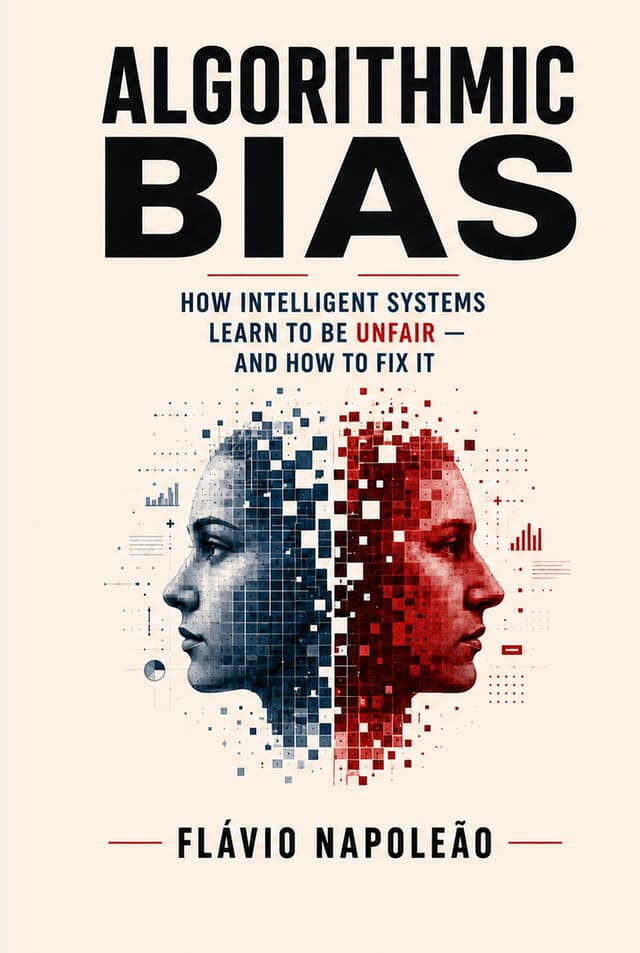
Algorithmic Bias
How Intelligent Systems Learn to Be Unfair — and How to Fix It
Algorithms do not become unfair by accident. They learn from the world we give them. In hiring, credit, healthcare, policing, education, and public services, automated systems increasingly shape human lives — and when those systems inherit distorted data, proxy variables, and weak oversight, they can reproduce injustice at scale.
In Algorithmic Bias, Flávio Napoleão explains how unfairness enters AI through data, design, law, and governance — and what institutions must do to prevent it, drawing on real cases from facial recognition, hiring algorithms, credit scoring, and criminal risk assessment.
Table of contents
- The Mirror That Lies
- How Machines Learn Our Worst Habits
- The Hiring Machine
- The Accuracy Paradox
- When the System Says No
- What the Machine Inherits
- Accountability and Recourse
- The Decision Not to Build
- Design for Contestability
- The Architects of Trust
More from this book
- The Robert Williams Case: What Facial Recognition Bias Really Costs
- The Amazon Hiring Algorithm That Learned to Discriminate Against Women
- When the System Says No: A Lawyer's Own Encounter with Algorithmic Refusal
- Inside COMPAS: How ProPublica Exposed the Algorithm Sentencing America
- What the Machine Inherits: The SCHUFA Case and the Myth of Neutral Data
- The Decision Not to Build: Lessons from the Netherlands' SyRI Welfare Scandal
- Design for Contestability: What Michigan's MiDAS Disaster Teaches About AI Accountability
- How Machines Learn Our Worst Habits: The Hidden Bias in Classification Systems